
refuge
on paying attention as a rebellious act of love

this newsletter is an experimental act where I share notes and reflections I collect over each month. every month I will focus on a word and let it take me places. if you like, I invite you to explore these words with me - their meaning and the stories they awaken in you.
Refuge is my word for June. in July, I will explore the word Ecotones.
refuge (n.) /ˈref·judʒ/
noun
"shelter or protection from danger, assistance in distress," late 14c., from Old French refuge "hiding place" (12c.), from Latin refugium "a taking refuge; a place of refuge, place to flee back to," from re- "back" (see re-) + fugere "to flee" (see fugitive (adj.)) + -ium neuter suffix in a sense of "place for."
similar:
shelter
protection
safety
security
asylum
sanctuary
preservation
safe keeping
place of shelter
place of safety
haven
safe haven
sanctum
safe house
harbour
port in a storm
retreat
hiding place
hideaway
hideout
❍
I want to write about refuge because we live in a world that disintegrates under our feet. In the daze of this wobbling experience, refuges are the sanctuaries of survival. Our sanity depends on our ability to find and build refuge - for ourselves and others, individually, collectively, metaphorically. Refuges are an escape route. In the safety of shelter, we may remember who we are.
Last month I started a new journal, “the book of June”. On the first page I wrote “Refuge - postcards from home”. I’ve been wandering around.
Is home a refuge? Are all homes refuges? Where is home?
❍
I want to write about Refuge because it lays at the core of this space. Writing as a refuge, reading as a refuge.
The words you are reading now were first roaring in my head, spilled into a paper, then typed onto a laptop as I sat on my kitchen table on a Monday morning.
Through them I lay a bridge towards you.
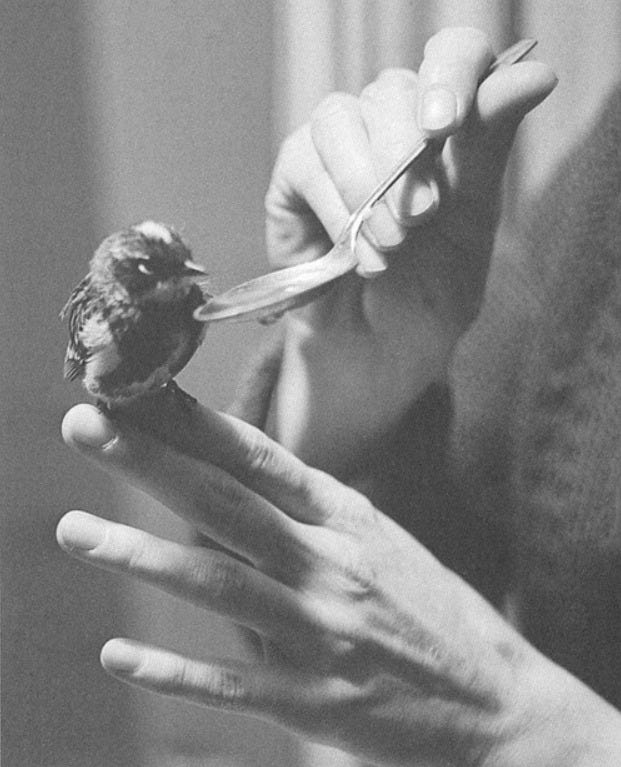
I hope you find refuge in them, just as I did.
_ words are a refuge.
❍
on paying attention
in a time when one of the most profitable resources is our scattered attention, piecing it back together is an act of rebellion and love. rebellious love, loving rebellion, anti-capitalism.
when our minds wiggle amongst war rubble, the latest productivity tip, how to be authentic (??), silly cat videos, the ultimate video trend, how to manifest anything - the big house and big life and the far away trip we never dreamt of, but now we do;
as we wiggle amongst the felt emptiness of our existence here where we are, and who we are now; we shall get back to poetry. we shall listen to the songs of Leonard Cohen, for instance, and sing along “there’s a crack, a crack in everything, that’s how the light gets in”
and look through the crack, stay there, marvelling at the light as it gets in. absorbing, owning, sustaining the light.
we shall return to Nina Simone, as she sings the song of Michael Bublé
(…)
Dragonfly out in the sun, you know what I mean, don't you know
Butterflies all havin' fun, you know what I mean
Sleep in peace when day is done, that's what I mean
And this old world is a new world
And a bold world
For me
For me
(…)
It's a new dawn
It's a new day
It's a new life
It's a new life
For me
And I'm feeling good
_
and we shall read Mary Oliver all over
(...)
I don't know exactly what a prayer is.
I do know how to pay attention, how to fall down
into the grass, how to kneel down in the grass,
how to be idle and blessed, how to stroll through the fields,
which is what I have been doing all day.
Tell me, what else should I have done?
Doesn't everything die at last, and too soon?
(...)
On the second chapter of Julia Cameron’s book The Artist Way, she recounts of her grandmother’s letters and what they taught her. “Life through grandmother’s eyes was a series of small miracles”.
“ My grandmother was gone before I learned the lesson her letters were teaching: survival lies in sanity, and sanity lies in paying attention. -Yes, her letters said, Dad’s cough is getting worse, we have lost the house, there is no money and no work, but the tiger lilies are blooming, the lizard has found that spot of sun, the roses are holding despite the heat.
My grandmother knew what a painful life had taught her: success or failure, the truth of life really has little to do with its quality. The quality of life is in proportion, always, to the capacity for delight. The capacity for delight is the gift of paying attention”
“The reward for attention is always healing”
“(…) pain is what it took to teach me to pay attention. In times of pain, when the future is too terrifying to contemplate and the past too painful to remember I have learned to pay attention to right now. The precise moment I was in was always the only safe place for me.”
_ attention is a refuge
❍
the garden
when I met Rūta some days ago in a bar in Neukölln, we updated each other on the things that have been on our mind lately. I told her I wanted to write about paying attention because it is my refuge, a rescue, and it is so important in these confusing times. she asked me what I have been paying attention to these days.
“I’ve been paying attention to the garden”.
whilst harvesting under the rain on a Friday morning, I payed attention. in fertile soils, when the summer comes and all the crops fruit under the sun, there is no distinction between edibles and weeds. weeds are a man made concept, and so they grow wild amongst the planted vegetables, when left unattended.
when the weeds have grown too big, weeding feels like a daunting task to get started, yet it must be done. like writing - it’s a necessary act of maintenance. it takes patience, commitment and presence. we let go the weeds so the other thoughts can breath. so there is space, and silence to nourish what we’ve planted.
I had not written for weeks, and the garden was a perfect reflection of my head - an overwhelming plot of weeds and vegetables, indistinguishable at first sight. I had no choice but to start weeding, somewhere, anywhere.
in the garden, nothing is ever done. keeping a garden, like being alive, is a daily act of care.
_ the garden is a refuge
❍
escape routes
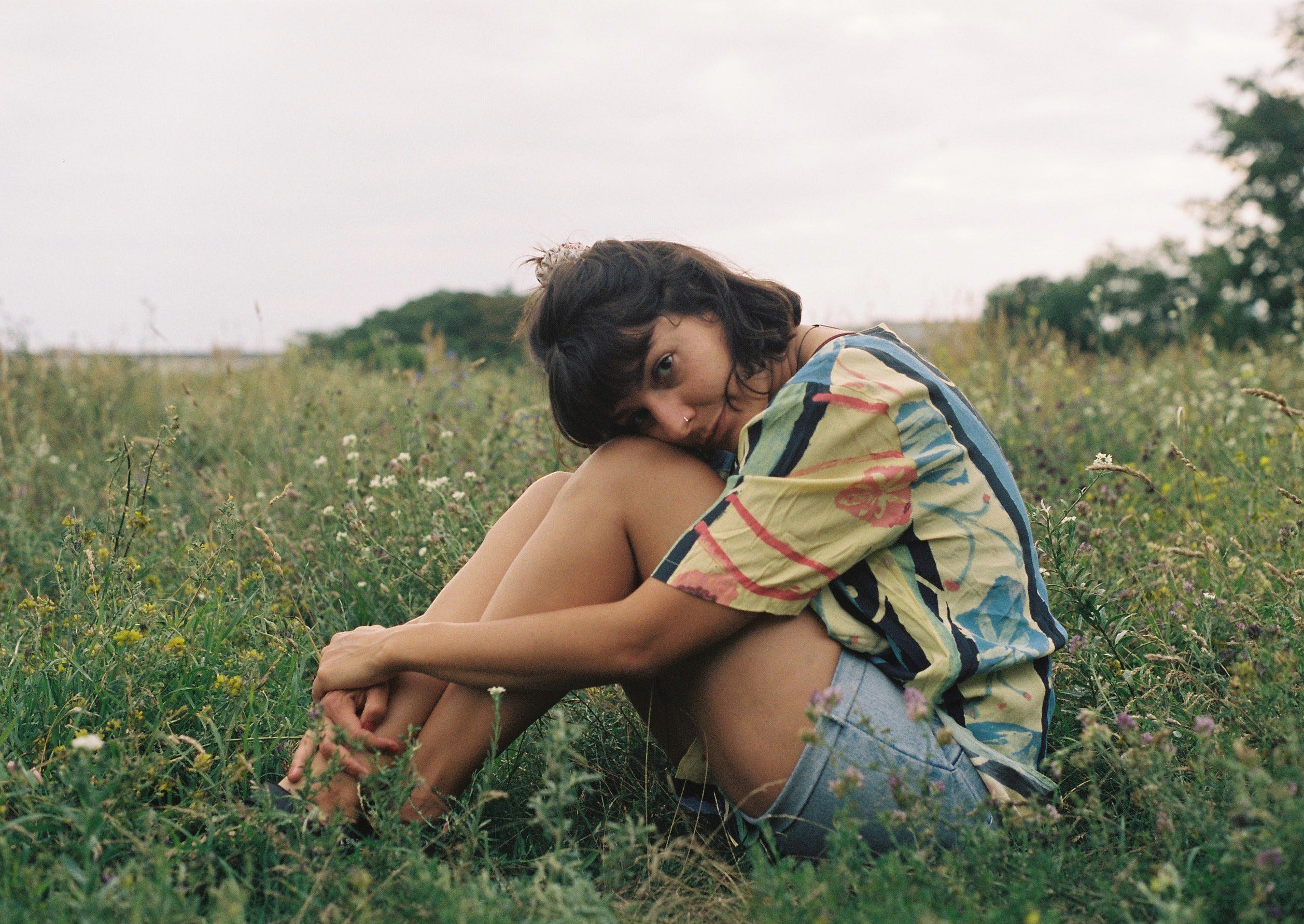
It’s been six years since the night I arrived to Berlin carrying nothing but a 25L backpack and a sleeping bag. I came here looking for a roof and a job, the rest would follow as a consequence or a mistake. It was July 2017.
It’s been a relationship of love and despair at times. At every attempt to leave, she gets hold of my feet with warm hands and a smile - “I brought you flowers, honey”. She knows of my weakness for organic matter and all that’s alive.
During my first year in the city, I chased gardens and plants with a Nikkormat and a Polaroid, wherever I went. I kept a journal in spanish and dreamt in a blend of languages and faded tones. It was a city of solitary encounters, where I felt deeply for the lost souls as I wandered the streets. Here, I cried in the subway for someone else’s pain as it troubled my own. I laughed.
I arrived here after spending almost two months at the heart of France. There, where we would bath in cold rivers and eat in the grass each day, the idea of a city was an unpleasant mirage of confusion and pain. As I watched the sunset over the lush hills, sitting by the fire, I wondered what had led us, humans, to the metropolis.
If I’d continue to ride this journey backwards, I would land on the Atlantic Coast, where I was born. Portugal was once the whole universe. To some extent, it still is its heart centre - the umbilical chord that ties me to this world. A vail that taints all that I see and feel. A pull towards the sea, its wild cliffs and dunes, the hills of cork and strawberry trees, slowness.
Yet the metropolis drew me in.
To secure my sanity, I drew a map of escape routes for the times when the city would become too unbearable to carry. They were my refuge in the land of concrete.
when you feel trapped, hop on the Ringbahn and go round the city as many times as needed, with a notebook, a camera, a book and your headphones, until the blues has calmed down
go to the botanical gardens, and take with you the cameras and the watercolors. pay attention to the light, the words, and soak up the humidity in the tropical room, whenever you sense the city is about to swallow you through its cracks
write letters in spanish, and portuguese, and italian, and stick photographs on them when this language taints your language, until your remember where you came from
walk your feet in the mud under the rain at tiergarten, when your feet get stiff and lost in roadmaps of concrete. then, keep wandering
when the wind blows strongly, go stare into the horizon at Tempelhof (“temple yard”), and fool yourself into believing you are standing by the Atlantic
spend your evening at Dussmann, the international bookstore. you can stay until midnight, when all your other dates feel like a waste of time.
I didn’t yet know about the lakes.
Schöneberg was my home district for over a year. “Beautiful Mountain”. There was nothing like a mountain, but a longing in my chest - for mountain trails and the sea.
It’s been six years and I know by heart all the islands of grass, flowers and water where I’ve taken refuge over the years. The lakes that have kept my summers cool, and my winters warm.
_ lake days are a refuge.
I am impressed by the depth of your thoughts and how they interlace with the beautiful poetry writing style.
The garden of my consciousness is my refuge.
Thank you for the inspiration, my dear.
Love xx
So proud of your beautiful thoughts and expressions <3 reminds me of this quote from Ian McGilchrist about attention as an act of love:
"The world we know cannot be wholly mind-independent, and it cannot be wholly mind-dependent… What is required is an attentive response to something real and other than ourselves, of which we have only inklings at first, but which comes more and more into being through our response to it — if we are truly responsive to it. We nurture it into being; or not. In this it has something of the structure of love."